
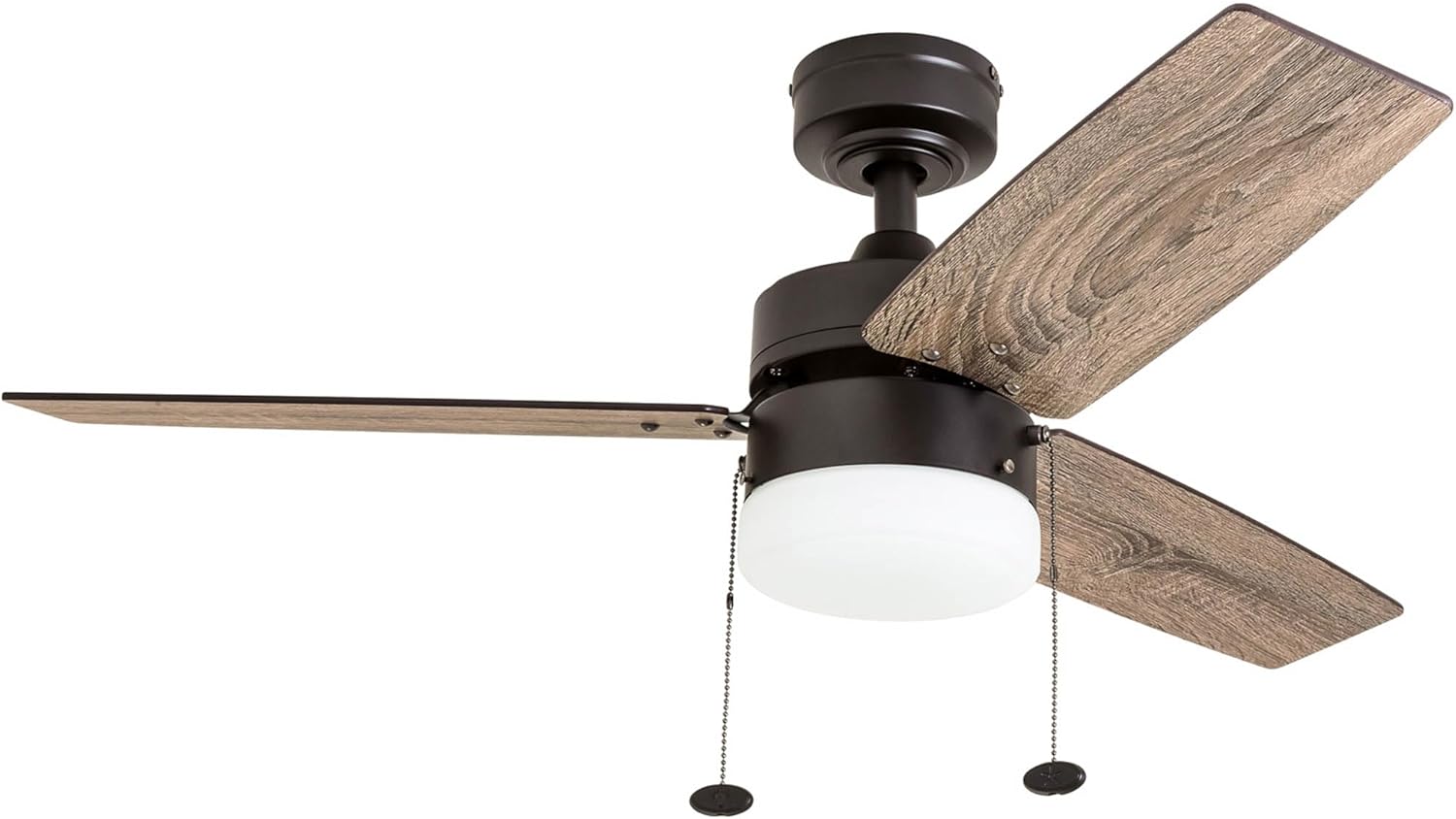
Measure the part of the room the fan actually needs to serve, then use the calculator for a blade-span starting point. The result is based on the current ENERGY STAR room-size table and adds a mounting note from the ceiling height you enter. Final selection still depends on the exact fan’s airflow, dimensions, instructions and the room layout.
Sizing is only part of installation planning. Confirm the ceiling box and support are fan-rated before hanging the fan.
For an open floor plan or a tall ceiling, use the large-room and high-ceiling layout guide to compare one fan with two fans and plan blade height.
Ceiling Fan Size Calculator
Enter room length, width and finished ceiling height. Use feet and decimals, such as 12.5.
Planning result
42–44 inch blade-span starting range
144 sq ft room. This is the transition point between two ENERGY STAR rows, so compare both 42- and 44-inch models.
At an 8-foot ceiling, check the exact assembled drop. A low-profile or flush-mount fan is often the practical route, and the finished blade height must remain at least 7 feet above the floor.
Planning tool only. Do not use the result as structural, electrical or installation approval. Follow the exact fan manual and use a fan-rated electrical box and support.
Ceiling Fan Size Chart by Room
| Room area | Suggested starting blade span | Typical room |
|---|---|---|
| Up to 75 sq ft | 29–36″ | Small office, closet or compact bedroom |
| 76–143 sq ft | 36–42″ | Bedroom or small living space |
| 144 sq ft | 42–44″ transition | 12×12 room |
| 145–225 sq ft | 44″ | Primary bedroom or medium living room |
| 226–400 sq ft | 50–54″ | Large bedroom or living room |
| Over 400 sq ft | Manufacturer-specific plan | Great room, open plan or large shop |
Ryan’s take — Spec-verified. The table follows ENERGY STAR’s ceiling-fan sizing guidance, last checked August 30, 2026. ENERGY STAR’s published rows overlap at exactly 144 square feet; the calculator displays a 42–44-inch transition range instead of hiding that ambiguity. ENERGY STAR’s table does not prescribe one span above 400 square feet.
How to Measure the Room
Multiply the room’s length by its width. A 12-by-12 room is 144 square feet. For an L-shaped or open-plan room, calculate the actual zone the fan must serve rather than automatically using the entire floor. The calculator accepts decimal measurements when the walls are not whole feet.
Placement matters too. ENERGY STAR recommends mounting a ceiling fan near the middle of the room, keeping the blades at least 18 inches from walls and at least 7 feet above the floor. When the ceiling permits, an 8- to 9-foot blade height is the preferred airflow range.
Low Ceilings: Check Finished Blade Height
A room-area result does not prove that a fan will fit vertically. On an 8-foot ceiling, compare the canopy-to-blade dimension before ordering. Our flush-mount ceiling fans for small rooms and low ceilings keep the existing low-ceiling product comparison in one place. If the ceiling is too low to maintain the required blade clearance, use a safer non-ceiling alternative.
Blade Span Is Only the First Filter
Two fans with the same blade span can publish different airflow. After choosing the size band, compare the exact model’s airflow in cubic feet per minute, controls, sound information when the manufacturer provides it, and location rating. Do not assume a larger diameter automatically means better performance in every room.
Ceiling height changes the mounting decision more than the room-area calculation. Use the ceiling fan downrod chart for taller ceilings. For the most common boundary case, the 12×12 room guide explains the placement tradeoffs around the 42- to 44-inch transition. Large garages need airflow, location-rating and clearance checks beyond a simple span result; start with the garage ceiling fan guide.
Ceiling Fan Sizing Questions
What size ceiling fan do I need?
Measure length times width, then use the ENERGY STAR room-area band as a starting point. Check the exact model’s airflow, dimensions and mounting instructions before buying.
What size fan fits a 12×12 room?
A 12×12 room is exactly 144 square feet, where ENERGY STAR’s published rows overlap. The calculator therefore shows a 42- to 44-inch transition range.
How high should ceiling fan blades be?
ENERGY STAR says blades should be at least 7 feet above the floor and recommends 8 to 9 feet when the ceiling allows. Use the exact assembled dimensions to verify the finished height.
Does CFM matter after choosing blade span?
Yes. Blade span is a room-size filter; CFM is the model’s published airflow. Compare CFM among exact models in the appropriate size band.
