

The wrong fan on a low ceiling is either useless or a hazard — too high and it barely stirs the air, too low and someone tall wears it. On an 8-foot ceiling you want a low-profile (flush-mount or hugger) fan that mounts tight and keeps the blades safely overhead. Here are the ones I’d actually put in a small bedroom, office, or nursery.
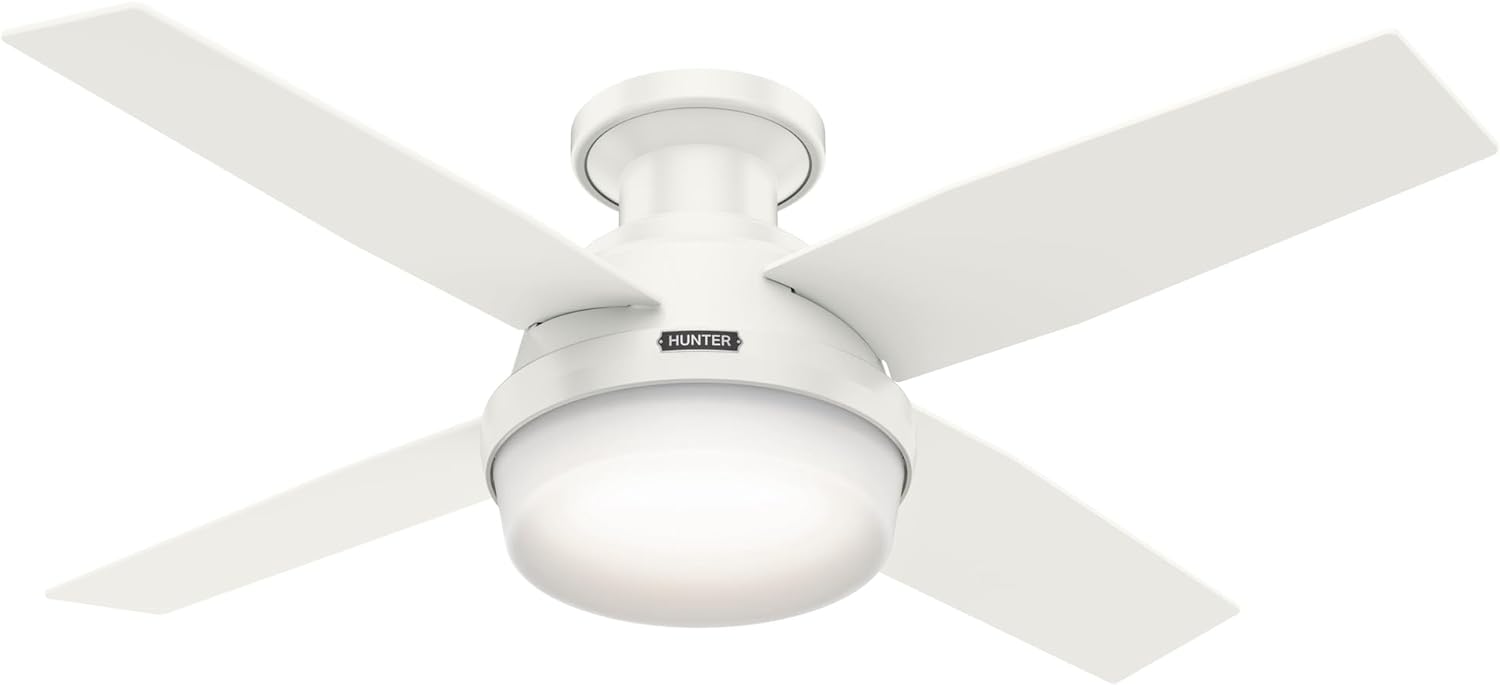
Hunter Dempsey Low Profile 44″
- Verified availability
- Ships from Amazon
My default recommendation for a small room. It’s a proper flush-mount from a brand that holds up, with an integrated LED light and a handheld remote, and the 44-inch span is right for a bedroom or office up to about 225 square feet. It runs on a standard AC motor, so it’s not the quietest or most efficient pick here, but for the price and reliability it’s the easy choice.
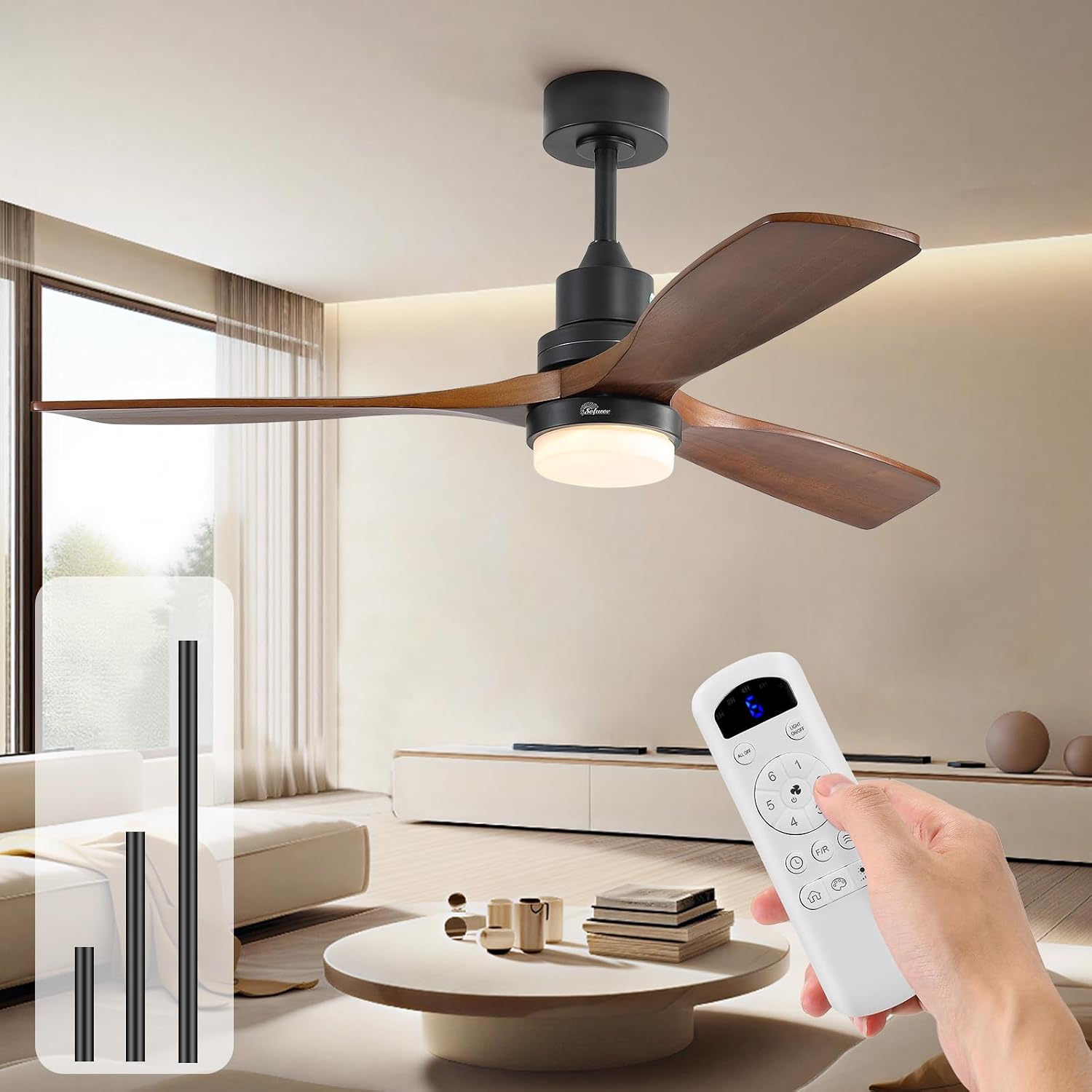
Sofucor 52″ Low Profile (DC)
- Verified availability
- Ships from Amazon
If you want quiet, this is the one. It’s a genuine DC-motor flush-mount — noticeably quieter and lower-draw than the AC fans on this list — with a dimmable LED and a remote, sitting only about ten inches off the ceiling. Good for a bedroom where a humming fan would keep you up.
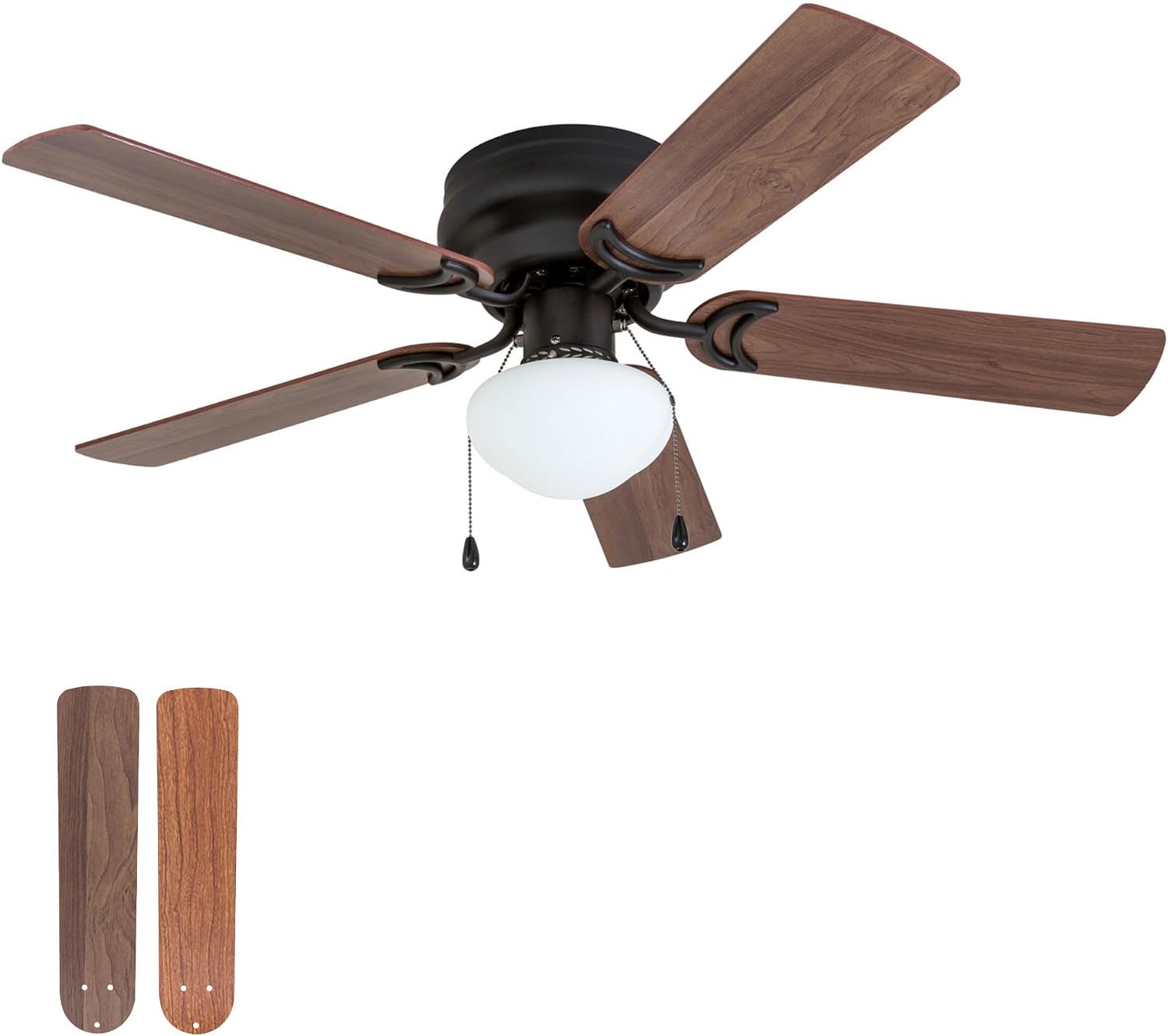
Prominence Home Alvina 42″
- Verified availability
- Ships from Amazon
The budget true-flush pick, and one of the few here with a real published airflow number: around 1,244 CFM, which is plenty for a room near 100 square feet. It has an 800-lumen LED but it’s pull-chain only — no remote — so factor a universal remote kit if you need one. For a small guest room or closet-office on a tight budget, it’s hard to beat.
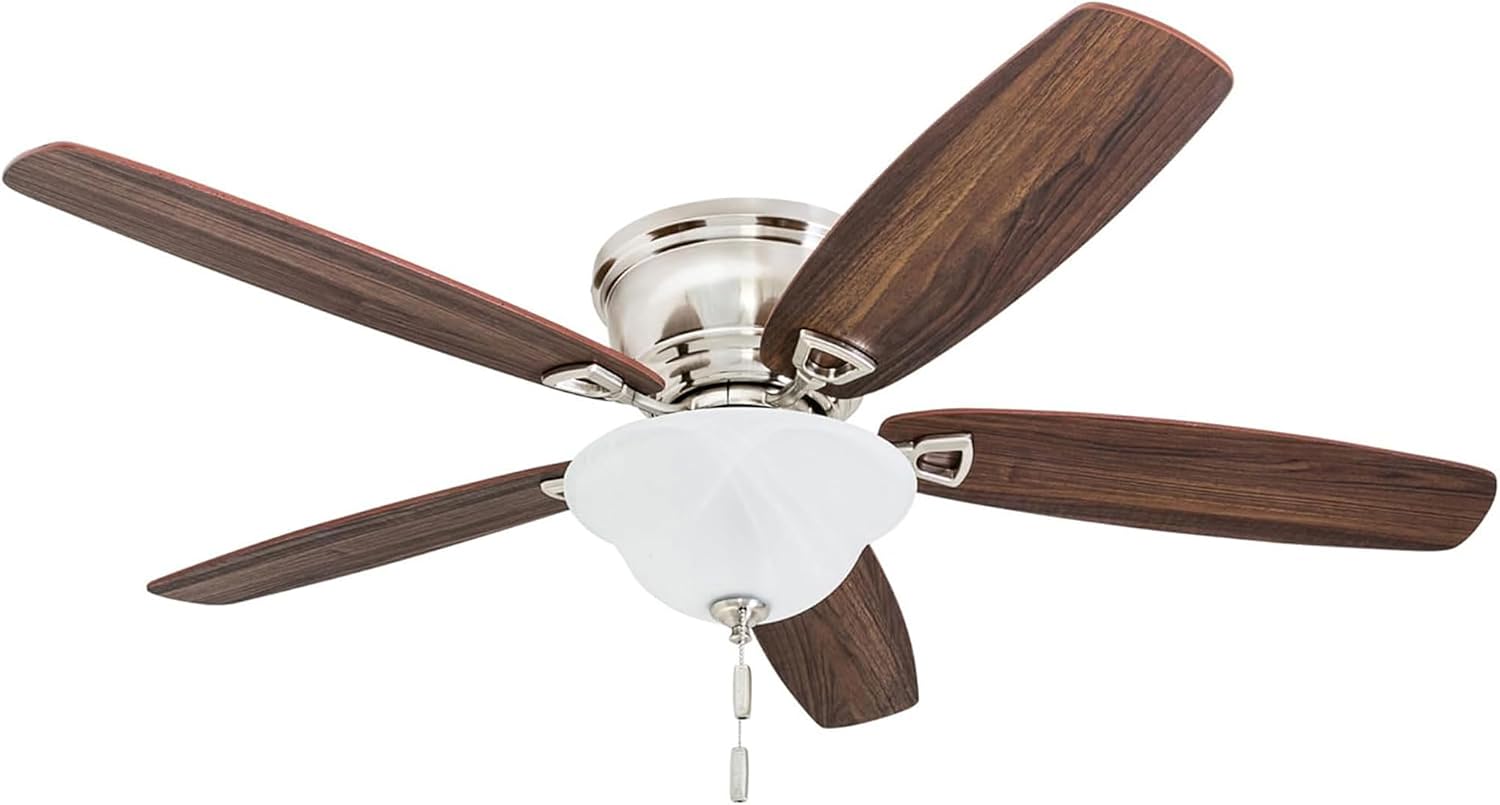
Honeywell Glen Alden 52″
- Verified availability
- Ships from Amazon
A larger hugger for a small living room or bigger bedroom that still has a low ceiling. It’s a simple AC fan with an LED light and pull-chain control — nothing fancy, but a solid, affordable way to get 52 inches of air movement without a downrod.
How to Choose a Low-Profile Fan
Clearance first. Keep the blades at least 7 feet off the floor. On a standard 8-foot ceiling a flush-mount clears that with room to spare; if your ceiling is taller you don’t need a hugger at all — see our downrod length chart.
Size to the room. Small rooms take smaller fans. Match blade span to square footage with our ceiling fan size chart. For a caged option that’s extra safe over a bunk or in a kid’s room, see the best enclosed ceiling fans.
AC vs DC. The DC picks here (Sofucor, LENIVER) run quieter and use less power; the AC picks are cheaper up front. In a bedroom, I’d pay for DC.
Low ceilings limit your fan span, which makes the light kit matter more. Our lighted fan comparison lists the flush-mount options with published lumens.
As an Amazon Associate, TheFansPro earns from qualifying purchases.
Frequently Asked Questions
What is the best ceiling fan for an 8-foot ceiling?
A low-profile (flush-mount or hugger) fan, because it mounts tight to the ceiling and keeps the blades safely above head height. A standard downrod fan on an 8-foot ceiling drops the blades to forehead level.
Do low-profile ceiling fans move less air?
A little. Sitting close to the ceiling gives the blades less room to pull air from above, so a hugger usually moves a bit less than the same-size standard fan. In the small rooms these are made for, it’s rarely noticeable.
What size ceiling fan fits a small bedroom?
For a room under about 144 square feet, a 42- to 52-inch fan is right; drop to 29-44 inches for a very small room, office, or nursery. See our room-size chart for the exact match.
What’s the difference between a flush mount and a hugger fan?
They’re basically the same thing: both mount directly to the ceiling with no downrod for low ceilings. “Flush mount” tends to sit the tightest; “hugger” models may drop an inch or two more.
Can you safely put a ceiling fan on a low ceiling?
Yes, with a low-profile fan. Keep the blades at least 7 feet off the floor. On a standard 8-foot ceiling a flush-mount fan clears that easily; a caged or enclosed model adds a margin of safety in a kid’s room.
