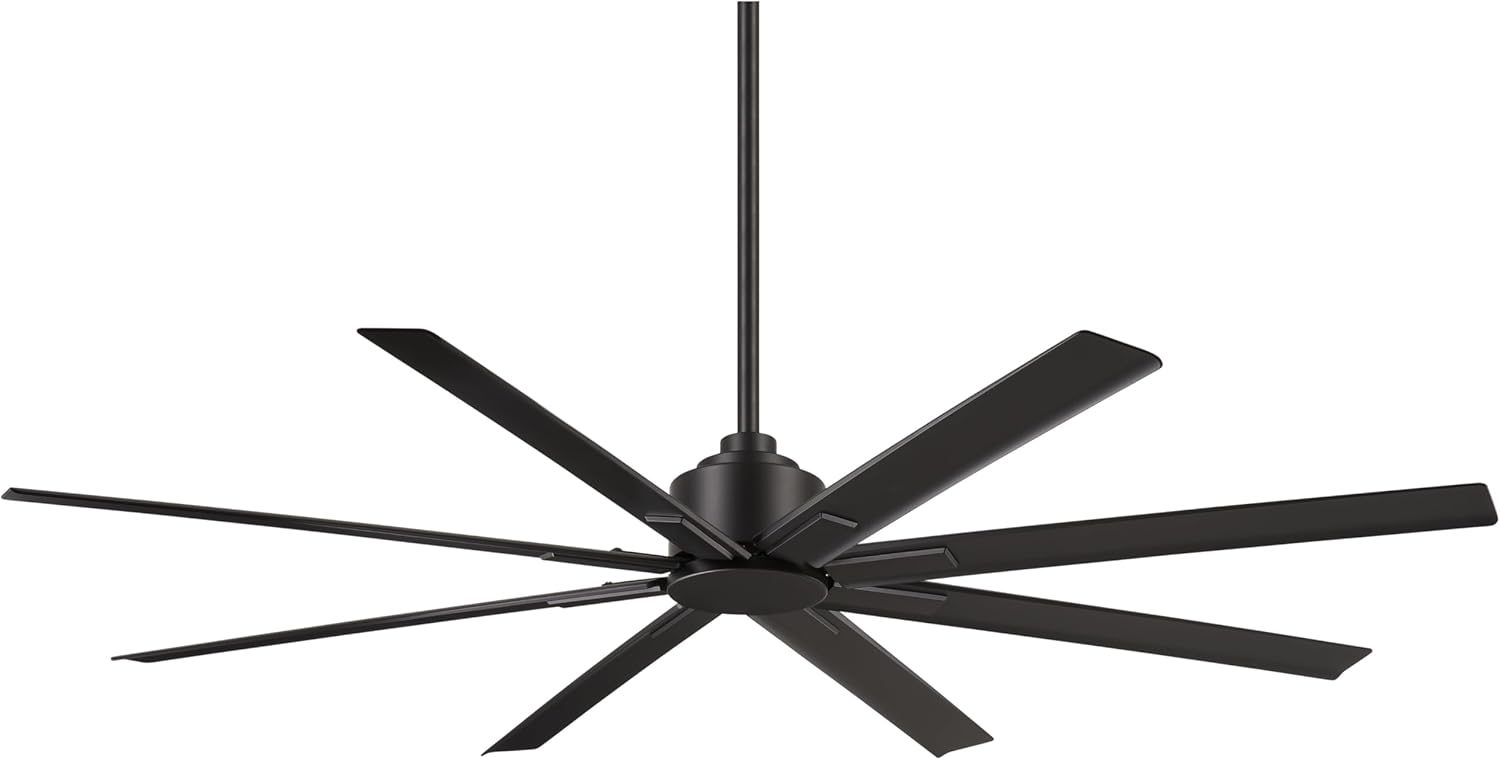
Quick answer: choose an approved downrod that puts the blades at the height recommended for your exact fan. Hunter recommends roughly 8–9 feet above the floor; its installation manual requires at least 7 feet. Ceiling height alone cannot determine the right rod.
Measure at the mounting point. You also need the model’s distance from the mounting connection to the blade plane. The light’s bottom edge is a different measurement.
Ceiling fan downrod length chart: a planning example
The chart below is calculated geometry, not a manufacturer compatibility chart. It assumes a target blade height of 8.5 feet and a 6-inch drop from the downrod connection to the blades. Replace that assumption with your model’s actual installation dimensions.
| Ceiling at mounting point | Calculated rod length with these assumptions |
|---|---|
| 9 ft | 0 inches |
| 10 ft | 12 inches |
| 11 ft | 24 inches |
| 12 ft | 36 inches |
| 13 ft | 48 inches |
| 14 ft | 60 inches |
| 16 ft | 84 inches |
| 18 ft | 108 inches |
| 20 ft | 132 inches |
Formula: rod length = ceiling height − desired blade height − model-specific drop to the blades. Use the same units throughout. Example: 12 feet − 8.5 feet − 0.5 feet = 3 feet, or 36 inches.
Select an available, manufacturer-approved length and recalculate the resulting blade height. Very tall ceilings may require a different fan or an approved extension system; a calculated length does not mean a compatible rod is available.
Before changing mounting hardware, check whether the ceiling box is rated to support a fan. A longer downrod cannot correct an unsuitable ceiling box.
For placement as well as hanging height, see ceiling fans for large rooms and high ceilings.
Check mounting type and clearances
For an 8-foot ceiling, begin with a model designed for low-profile mounting and verify its blade clearance. Do not assume every standard fan can be converted to a hugger. Hunter’s Aerodyne manual requires 7 feet from floor to blades and 18 inches from blade tips to walls; use your own model’s requirements if they differ.
Downrods and slope adapters are model-specific
Check diameter, threading, pin arrangement, approved length, wire length and any permitted coupler against the exact fan instructions. Matching the brand or finish alone is not sufficient. Hunter Original downrods, for example, belong to a different compatibility family from other Hunter models.
For a vaulted ceiling, measure the height where the fan will hang and check both the canopy’s allowed angle and blade clearance from the slope. Use only the adapter approved for the fan. Plan installation or changes with a qualified installer rather than treating a longer rod as a quick swap.
If the fan wobbles after a mounting change
Stop it and have the installation checked before continued use. The ceiling fan noise guide explains safe observations and stop conditions; it cannot verify a ceiling connection remotely.
Sources and next steps
Spec-verified: Hunter downrod guidance and compatibility families and the Aerodyne installation manual, checked October 2, 2026. The example chart is arithmetic using the stated assumptions, not a test result.
