
The bathroom fan is the only fixture in the house people buy purely on price,
and it’s the one they complain about every single day afterward. Too loud to run
during a phone call, or so weak the mirror still fogs.
Two numbers decide which one you end up with, and they’re both printed on the box.
Then there’s a third thing nobody tells you, which is that the duct behind the fan can
throw the whole rating away.
Sones, in plain terms
Sones measure loudness the way a person perceives it, not the way a meter does.
One sone is roughly a quiet refrigerator in the next room. Two sones is twice as loud
as one, and four is twice as loud again. It scales the way you’d expect, which is why
it’s a better number than decibels for this job.
| Sone rating | What it sounds like | Where it belongs |
|---|---|---|
| 0.3 to 0.5 | You have to check whether it’s on | Master bath, anywhere adjoining a bedroom |
| 0.8 to 1.0 | Soft hum, easy to talk over | The right target for most bathrooms |
| 1.5 to 2.0 | Clearly audible, not annoying | Powder room, guest bath, basement |
| 3.0 and up | You will avoid turning it on | Nowhere, honestly |
The spread in this category is bigger than people expect. The fans below run from
0.3 sones to 2.0. I left one popular fan off the list entirely because
it’s rated at 5 sones and still sells well at around $140, which tells
you how little attention the rating gets at checkout.
How much CFM you actually need
The rule most sites quote is one CFM per square foot. That’s fine for a small
powder room and it undersizes anything with a shower in it. The way I size them:
| Bathroom | Minimum CFM | What I’d fit |
|---|---|---|
| Under 50 sq ft, no shower | 50 | 50 CFM is genuinely enough |
| 50 to 100 sq ft with shower | 80 to 110 | Go 110 and run it on low |
| Over 100 sq ft | 1 CFM per sq ft, then add | 110 CFM, or two fans |
| Enclosed shower or steam | Its own dedicated fan | Rate it for the shower alone |
This is why I keep recommending the selectable models. A fan you can set to 50, 80
or 110 at install time means you don’t have to be right about this in the store, and
you can run 110 CFM of capacity at a lower, quieter speed instead of running a small
fan flat out.
The part that actually decides your airflow
Here’s what I wish more homeowners knew before they buy. A 110 CFM fan is
only a 110 CFM fan on the test bench. That number is measured under ideal
conditions with clean, short, straight duct. Your install is not that.
Every elbow, every foot of flex duct, and every inch of diameter you give up costs
you airflow. I’ve pulled brand new 110 CFM fans out of bathrooms that were moving a
fraction of that because someone ran them into 4-inch flex with three bends and a
crushed section above the joist.
What to do about it, in order of how much it matters:
- Use the biggest duct the fan accepts. If it takes 6 inch, run 6 inch. Reducing to 4 inch to match old duct is the single most common way people throw away the fan they just paid for.
- Rigid over flex wherever you can reach. Flex duct is corrugated inside and it drags.
- Keep the run short and the bends few. Straight out through the soffit beats a scenic route to the roof.
- Vent it outside. Not into the attic. I still find this every year, and it ends in mold on the roof sheathing.
If your duct is fixed at 4 inch and you can’t change it, size up on the fan’s rated
CFM to compensate rather than buying exactly what the room calls for.
The fans
Panasonic WhisperFit FV-0511VF1 – what I fit most often

- 50/80/110 CFM selectable
- 0.8 sones
- 15W
- 3 speeds
- Retrofit, no attic access
- 13″ housing
0.8 sones at 110 CFM on 15 watts, and you set the airflow with a switch on the unit
rather than committing at purchase. For a standard bathroom with a shower this is the
default answer.
The retrofit housing is the other reason it’s on this list. It goes in from below,
so you are not crawling through an attic in July to fit it, and it drops into most
existing openings.
Skip it if: you want a light in the same fixture. This one doesn’t
have one, and the LED version below costs meaningfully more. Also, the 13-inch housing
is wider than the budget fans, so check your joist spacing before you order.
BES5080110 – the quiet one
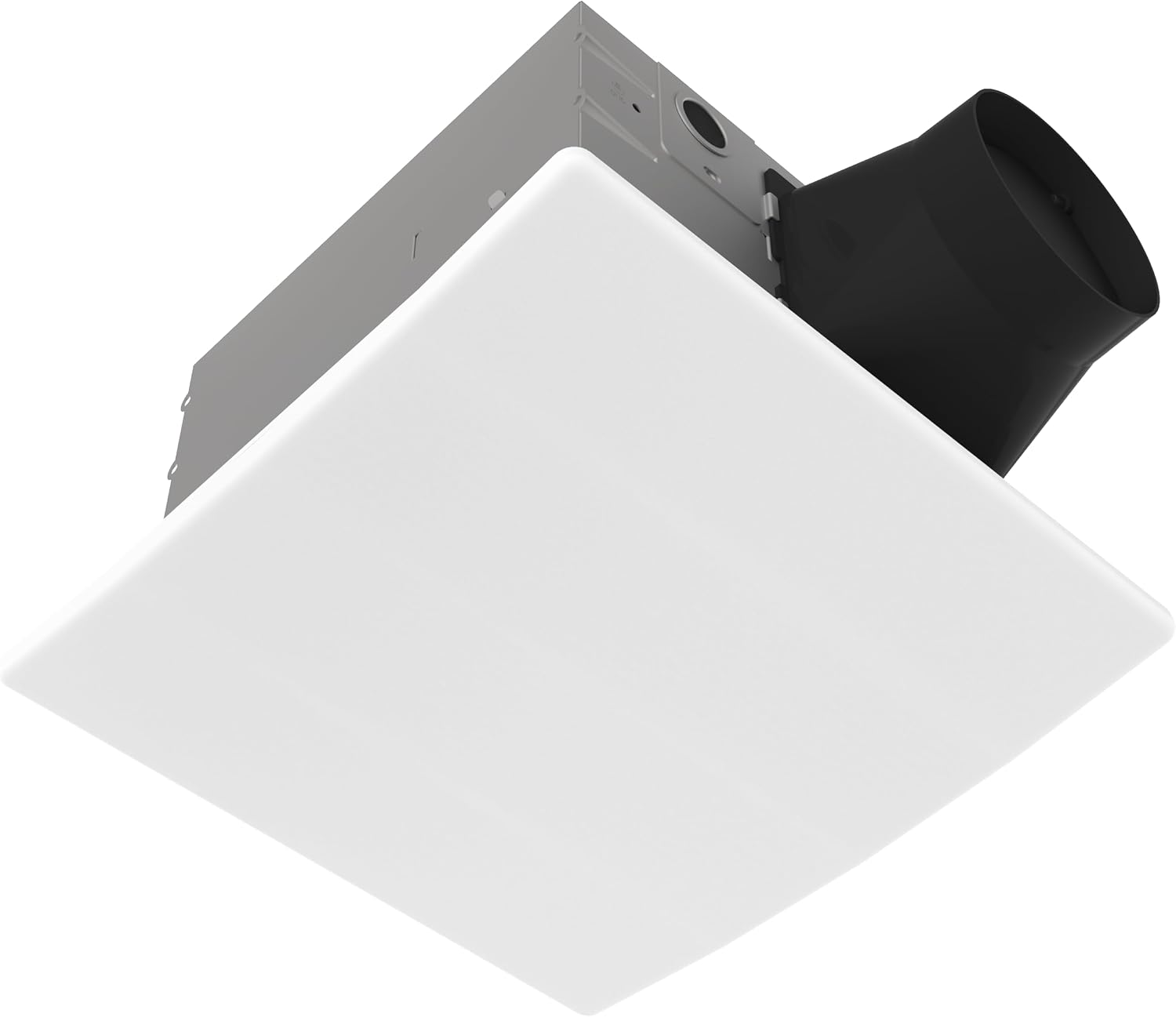
- 50/80/110 CFM selectable
- 0.3 / 0.5 / 1.0 sones
- 2.9 to 9.5W
- Energy Star
- 3 speeds
- No light
0.3 sones on its lowest setting is the quietest figure in this
whole category, and it draws between 2.9 and 9.5 watts depending on speed. If the
bathroom shares a wall with a bedroom, this is the one.
Selectable 50/80/110 CFM like the Panasonic, Energy Star rated, and roomside
install so no attic access.
Skip it if: you need a light. And a quiet fan has one genuine
downside nobody mentions: people forget it’s running and leave it on for hours. If
that bothers you, put it on a timer switch.
Panasonic WhisperFit with dimmable LED – when you want one hole in the ceiling
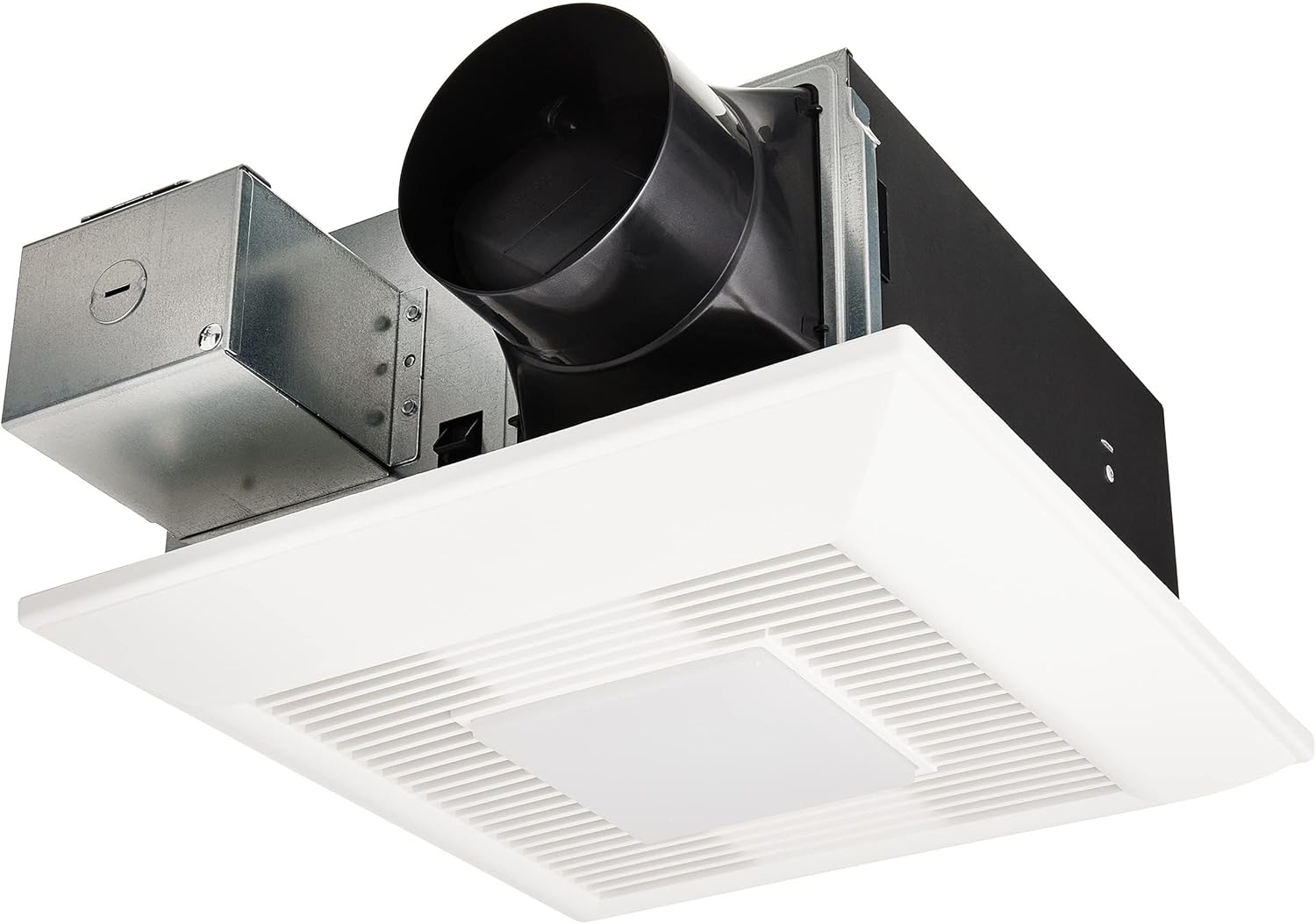
- 110 CFM
- 0.8 sones
- 10W
- Dimmable LED
- 3 speeds
- 10.25″ housing
Same 0.8 sones and 110 CFM as the top pick, on 10 watts, with a dimmable LED in the
same housing. In a small bathroom where you’d otherwise cut two holes, this is worth
the money.
Skip it if: you already have good bathroom lighting. You’re paying
around $50 more than the plain WhisperFit for a light you may not need, and combination
units mean that when one half fails you’re replacing both.
120 CFM with LED – the value option
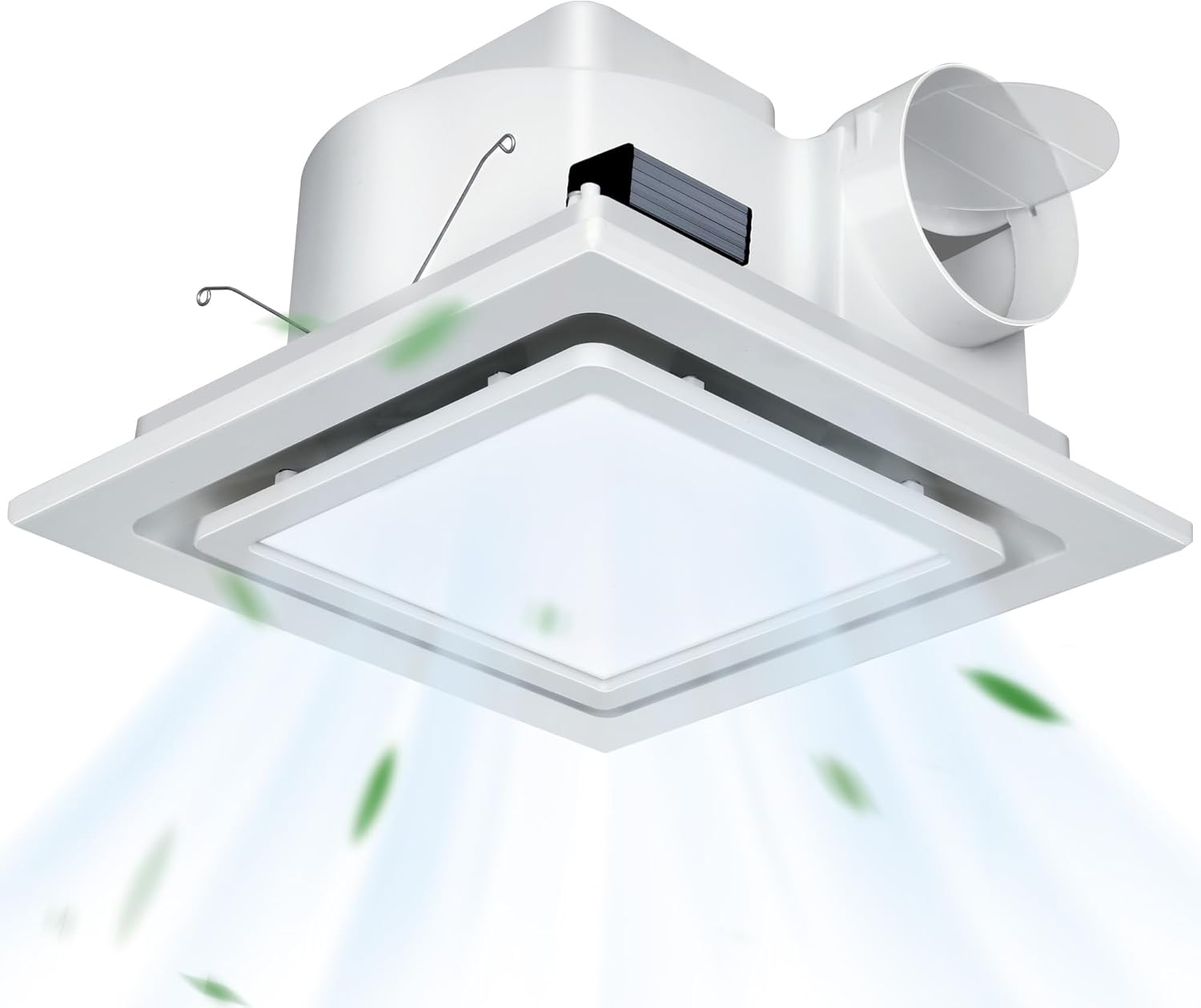
- 120 CFM
- 1.0 sones
- 42W
- 1,000 lumens LED
- 12″ panel
- Ceiling mount
120 CFM at 1.0 sones with a 1,000 lumen light for well under half the Panasonic’s
price. On paper that’s the best value here and for a lot of bathrooms it genuinely is.
Skip it if: efficiency matters to you. It pulls 42
watts against the Panasonic’s 10, and it’s single speed, so you get 120 CFM or
nothing. Fine for a bathroom you ventilate in bursts. Less good if the fan runs on a
humidistat all day.
Broan-NuTone LED retrofit – for the awkward install
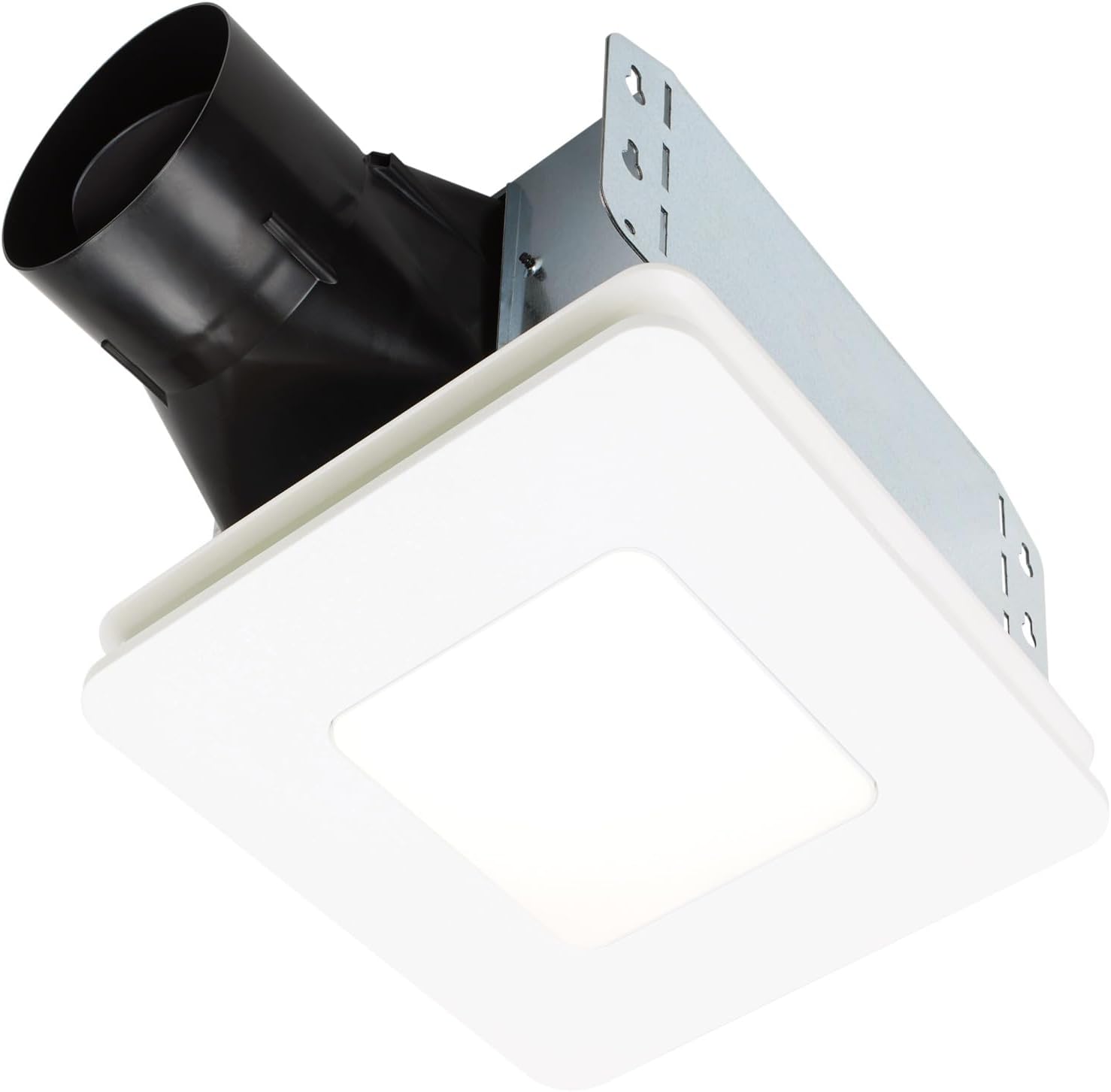
- 60 CFM
- 0.9 sones
- Energy Star
- LED light
- Rated to 79 sq ft
- No attic access needed
60 CFM at 0.9 sones with a light, Energy Star rated, and it fits from below without
attic access. Rated to 79 square feet, which covers most standard bathrooms.
Skip it if: your bathroom has a real shower and any size to it. 60
CFM is the honest limit here and I would not put it in a full bath with a tub. It’s the
right fan for a powder room or a small ensuite.
Broan-NuTone heater combo – only if the room is genuinely cold
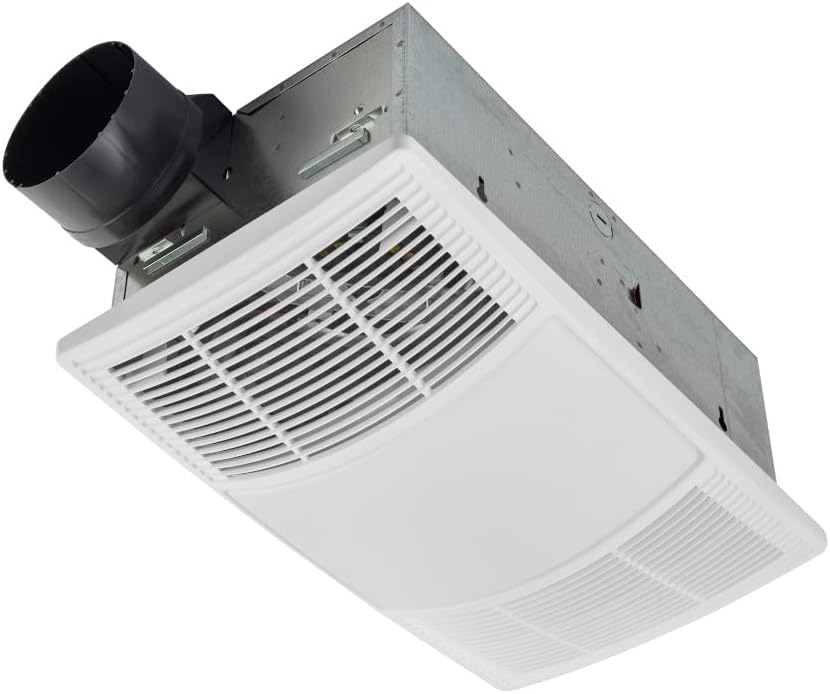
- 80 CFM
- 1.5 sones
- 1,300W heater element
- 3-level CCT LED
- Ceiling mount
80 CFM at 1.5 sones with a 3-level colour-selectable LED and a heater. For a tiled
bathroom over an unheated crawlspace this solves a real problem.
Read the wiring requirement first. That 1,300 watt figure is the
heater element, not the fan, and it usually wants its own dedicated circuit. This is
the one on the list most likely to need an electrician rather than a Saturday.
Skip it if: your bathroom is already comfortable. You’re paying for
a heater and a bigger install job to solve a problem you may not have.
Broan-NuTone 50 CFM – the honest cheap one
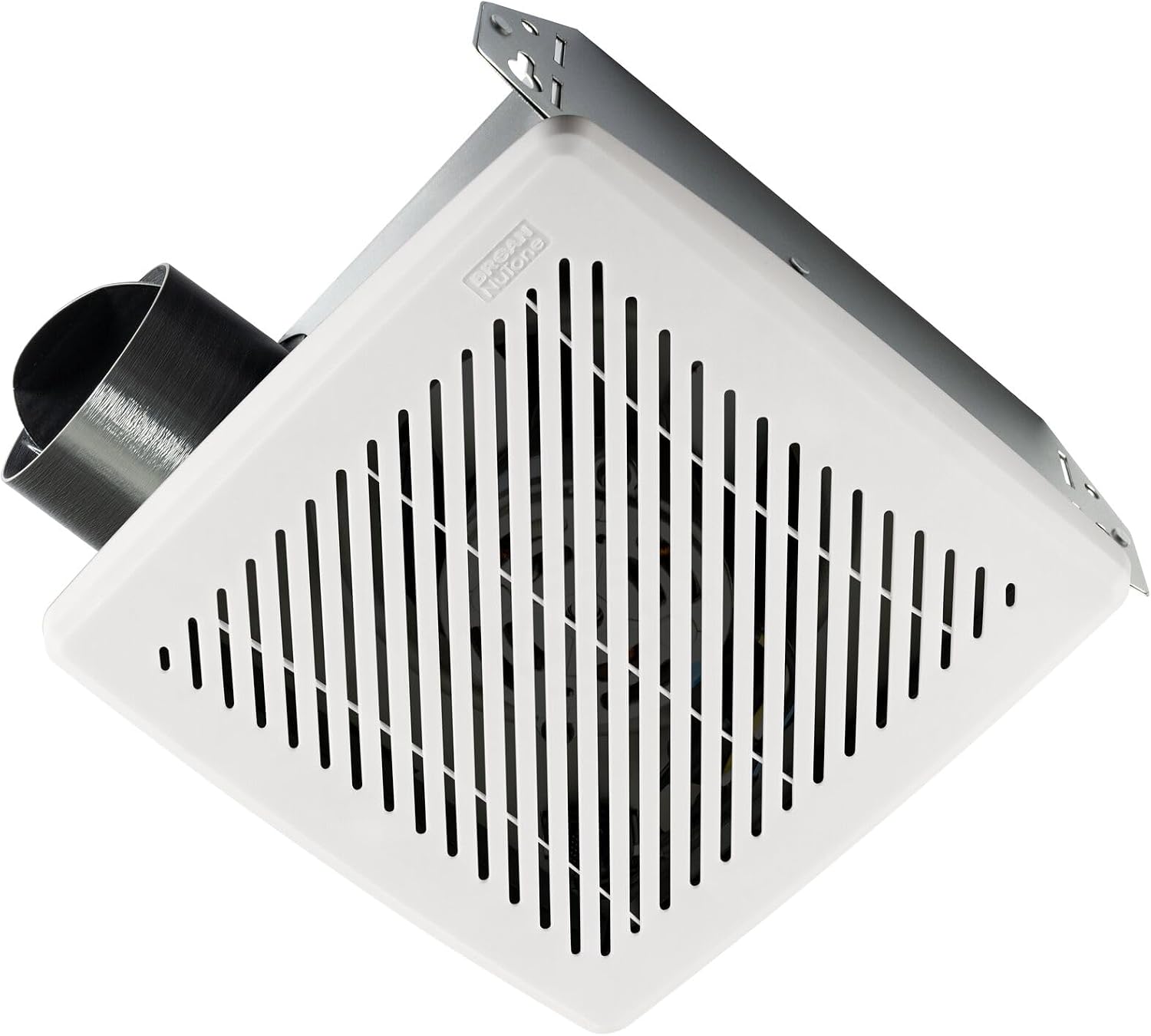
- 50 CFM
- 2.0 sones
- 55W
- Energy Star
- 7.25″ housing
- No light
Around $22, 50 CFM, 2.0 sones, Energy Star. For a powder room, a rental turnover, or
replacing something that died on a Sunday, this is a perfectly reasonable fan and I’ve
fitted plenty.
Skip it if: the room has a shower. 2.0 sones is audible and 50 CFM
will not clear steam from a full bathroom. Buy it knowing exactly what it is.
Three things worth knowing before you order
Measure the housing, not just the grille
The visible grille is always bigger than the hole. What matters is the housing depth
and width, because it has to sit between your joists and under whatever is above the
ceiling. The Panasonic top pick is 13 inches wide. The budget Broan is 7.25. If you’re
dropping into an existing opening, measure before you buy.
A timer switch is the cheapest upgrade you’ll make
Bathroom fans need to run 15 to 20 minutes after the shower stops to actually clear
the moisture, and nobody does that manually. A countdown timer switch costs very little
and does more for mold prevention than moving up a tier of fan.
Quiet has a downside
Once you’re under about 1 sone people genuinely cannot tell the fan is on. That is
the point, and it also means the fan runs for hours. Pair anything at 0.3 to 0.8 sones
with a timer or a humidistat.
As an Amazon Associate, TheFansPro earns from qualifying purchases.
Questions people actually ask me
What sone rating should I look for in a bathroom fan?
Aim for 1.0 sones or below for any bathroom next to a bedroom, and 1.5 to 2.0 is fine for a powder room or basement. Anything at 3 sones or more will annoy you enough that you stop using it, which defeats the purpose.
How many CFM do I need for my bathroom?
Roughly one CFM per square foot as a floor, but go to 80 or 110 CFM for anything with a shower in it. I’d rather fit a 110 CFM fan and run it on a low speed than run a 50 CFM fan flat out for twice as long.
Can I use 4-inch duct with a 110 CFM fan?
You can, and you’ll lose airflow doing it. Rated CFM assumes short, straight, correctly sized duct. If you’re stuck with 4 inch, buy more rated CFM than the room calls for to make up the difference, and keep the run as short and straight as you can.
Do I need an electrician to replace a bathroom fan?
Usually not for a like-for-like swap on the same circuit, if you’re comfortable working in a ceiling with the breaker off. You do want one for anything with a heater element, since those typically need a dedicated circuit.
How long should the fan run after a shower?
Fifteen to twenty minutes. That’s long enough to actually pull the moisture out rather than just the visible steam, and it’s why a timer switch is worth more than most fan upgrades.
What I’d buy
The Panasonic WhisperFit for a normal bathroom with a shower. The BES5080110 if it
shares a wall with a bedroom and you want silence. The $22 Broan for a powder room,
without apology.
Whichever you pick, spend the extra few minutes on the duct. It matters more than the
difference between any two fans on this page.
More on how the different fan types compare in
every type of fan explained,
and if it’s bedroom noise you’re chasing, our
quietest ceiling fans guide
uses the same approach. For lighting a room properly rather than just venting it, see
ceiling fans with lights.
