
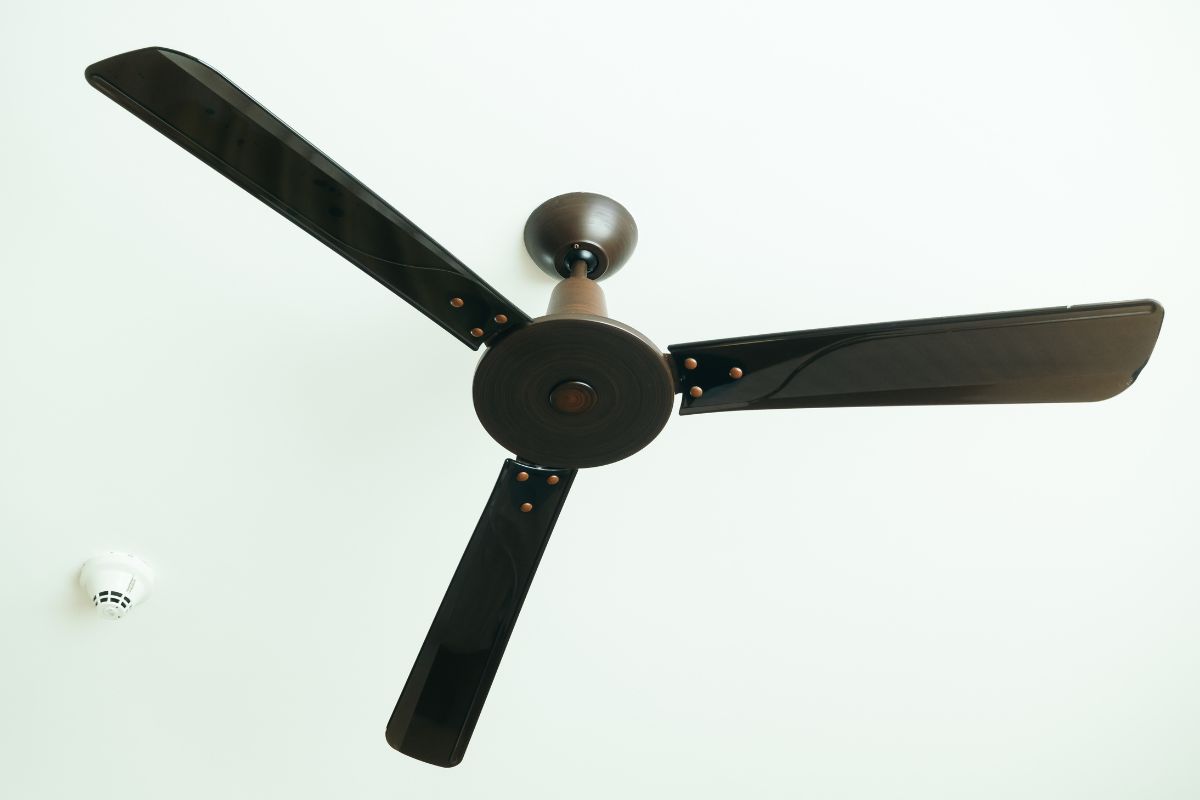
You’ve probably already got ceiling fans in your home to keep things cool and comfy — but what about your garage? Whether it’s your gym, workshop, hangout zone, or just where you tinker and store tools, garages can get hot as hell in the warmer months. The fix? A proper garage ceiling fan.
These fans are built to handle tougher conditions — higher temps, dust, humidity — and still keep the air moving. Adding one can totally change how usable your garage feels, especially in the summer.
The only issue? There are a ton of options out there now, and not all of them are worth your money. That’s why we pulled together a list of the best ceiling fans for garages — plus a quick buyer’s guide and answers to common questions to help you find the right setup for your space.
Updated July 2026: I re-checked every fan on this page against live Amazon listings this week and cut five models that have gone out of stock or been discontinued. Everything below is buyable today. I’ve hung more garage fans than I can count — the picks and the sizing advice here come from that, not from spec sheets.
Our Top Picks
- Top pick for most garages: Honeywell Phelix 56” — right size for a 2-car garage, great lights, fair price
- Budget / 1-car garage: Prominence Home Reston 42”
- Low ceiling: Hunter Dempsey 44” Low Profile
- Garage gym or hangout: Big Ass Fans Haiku L
- Damp or unfinished garage: Minka-Aire Xtreme H2O 65” (wet-rated)
- Workshop spot cooling: Air King 9718 18” Industrial
Quick Comparison
| Fan | Size | Best for | Light | Damp OK? |
|---|---|---|---|---|
| Honeywell Phelix | 56” | Most 2-car garages | 3 dimmable LEDs | No |
| Prominence Reston | 42” | 1-car garages, budget | LED globe | No |
| Hunter Dempsey LP | 44” | Low ceilings (≤9 ft) | Optional | No |
| Big Ass Fans Haiku L | 52” | Garage gyms & hangouts | Dimmable LED | No |
| Minka-Aire Xtreme H2O | 65” | Damp / big / unfinished | Add-on | Yes (wet-rated) |
| Air King 9718 | 18” | Workbench spot cooling | No | Shop-grade |
Honeywell Phelix 56” — Top Pick for Most Garages
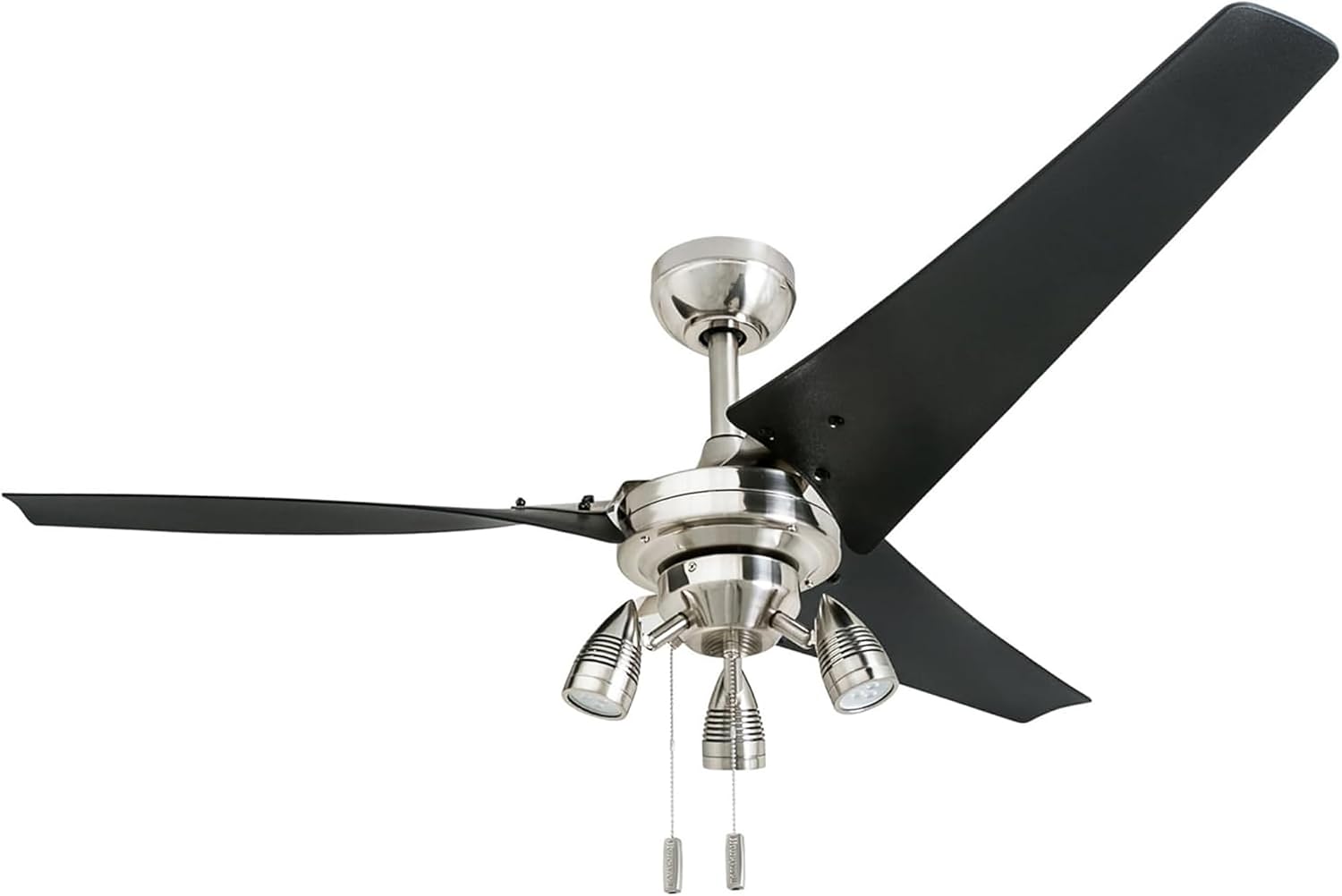
- 56-inch — sized for a 2-car garage
- 3 dimmable LED spotlights
- 3 speeds, pull chain
- Dual mount: flat or angled ceiling
If I could only recommend one fan on this page, it’s this one. A standard two-car garage runs 400–500 square feet, and the Phelix’s 56-inch span is the right tool for that space — most of the “garage fans” people buy are living-room-sized 42s that just stir the air over one bay.
The three blades are ABS plastic with a matte black finish over a chrome body. Plastic sounds like a knock, but in a garage it’s actually what you want: ABS doesn’t warp when the space bakes to 110°F in August the way cheap veneer blades do.
Under the blades sit three LED spotlights, bright enough to work under and dimmable when you’re just hanging out. Dual-mount hardware handles flat or vaulted ceilings.
Pros
- Real airflow for a full two-car garage
- Dimmable LED spotlights double as task lighting
- ABS blades shrug off heat swings
- Dual mount for flat and angled ceilings
Cons
- Installation instructions are famously confusing — budget an extra half hour
- Indoor-rated: not for garages with damp problems
Prominence Home Reston 42” — Budget Pick for Small Garages
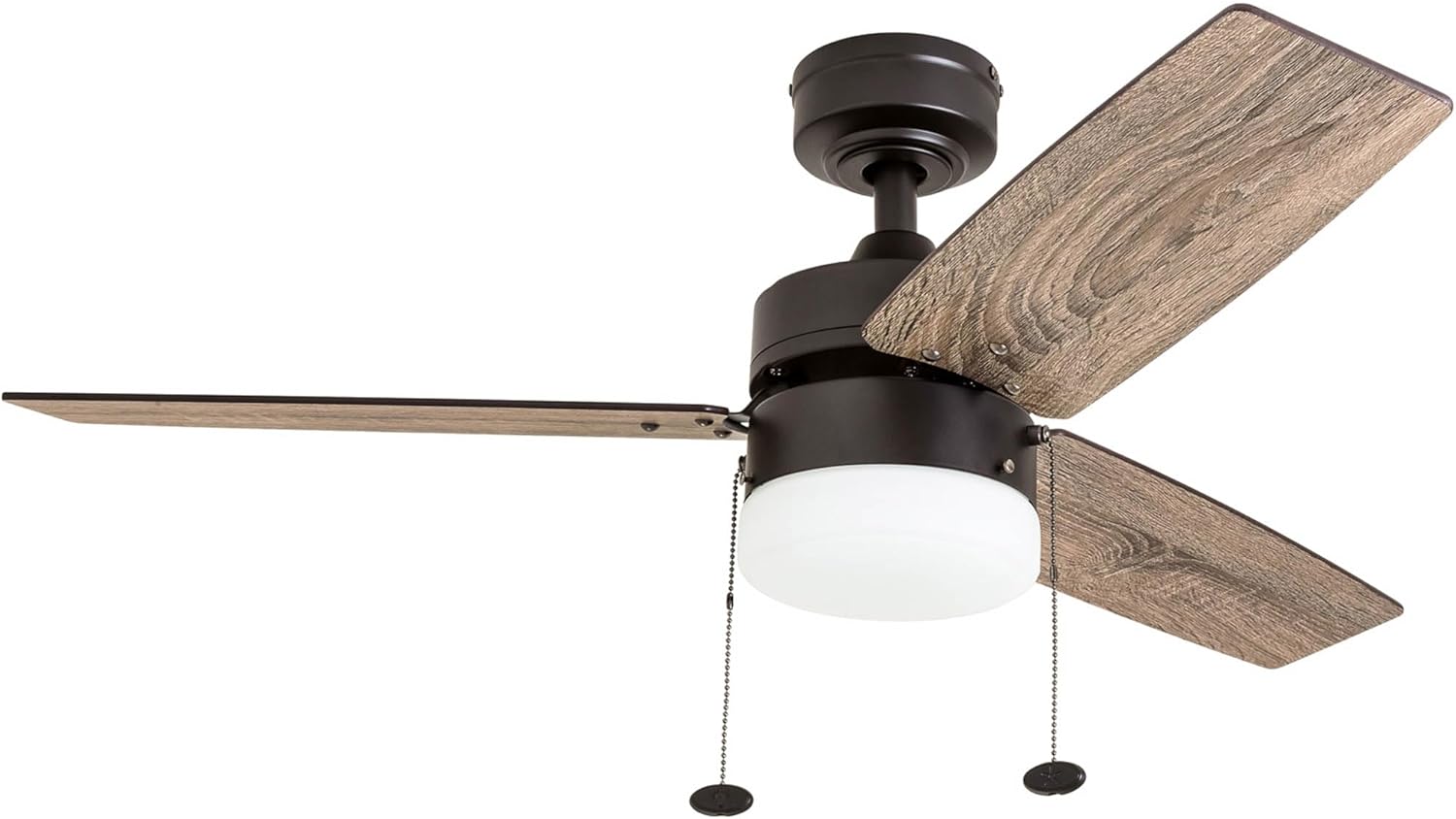
- 42-inch — for 1-car garages up to ~225 sq ft
- Integrated LED light globe
- Reversible blades & motor
- Dual mount: flat or angled
For a one-car garage or a small workshop corner, the Reston does the job for the least money of anything here. The integrated LED globe matters more than you’d think — most small garages have exactly one bare bulb, and this replaces it with real light and moving air in one install.
The blades are reversible — rough pine on one side, maple on the other — and the motor reverses for winter. It mounts flat or angled, and it runs off a plain pull chain, so there’s no remote to lose in a toolbox.
Pros
- Cheapest way to get light + air in a small garage
- Dual mounting for flat and vaulted ceilings
- Reversible motor for winter
Cons
- 42 inches won’t move enough air in a 2-car garage
- Dry-rated only
Hunter Dempsey 44” Low Profile — Best for Low Ceilings
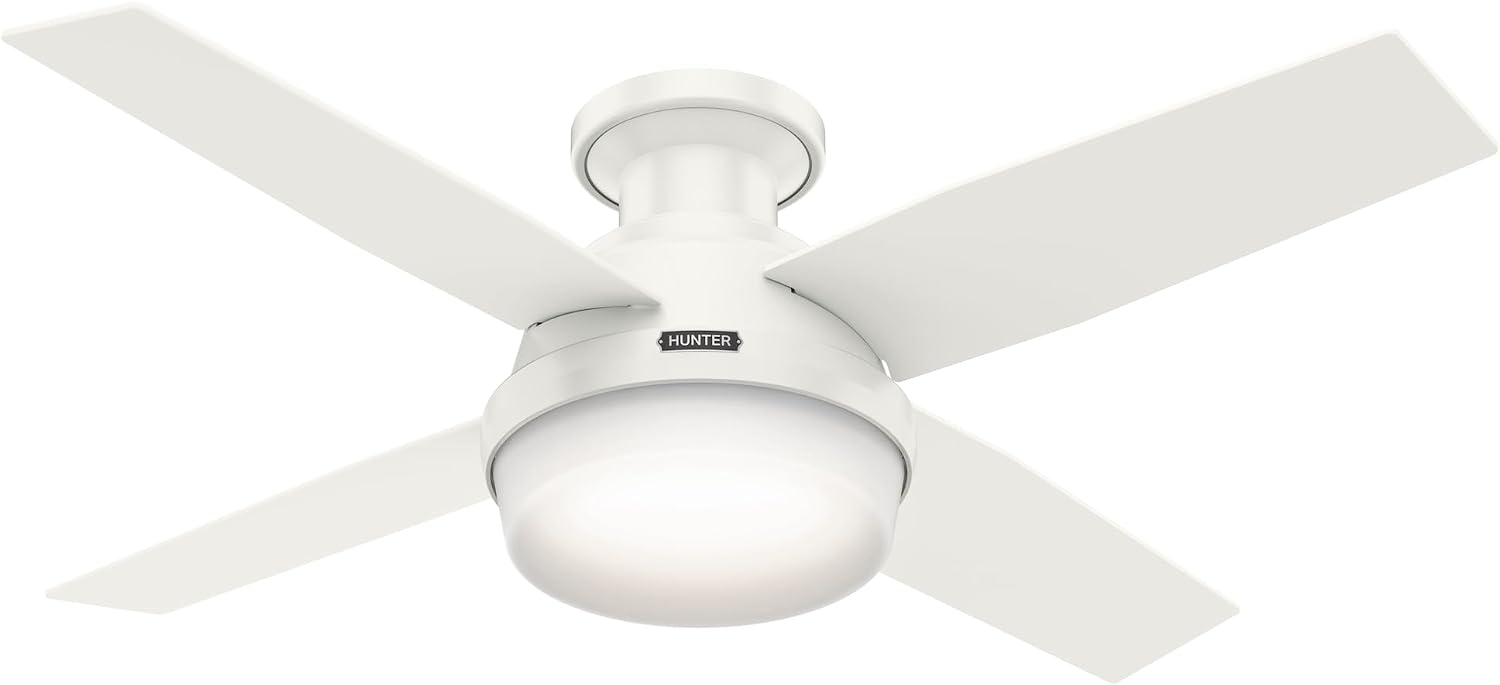
- Flush-mount — hugs the ceiling
- 44-inch, reversible blades
- Quiet WhisperWind motor
- For garages with ~9 ft ceilings or less
Here’s the mistake I see constantly: a standard downrod fan in a garage with an 8-foot ceiling, blades spinning at forehead height right where someone lifts a kayak off the roof rack. If your ceiling is 9 feet or under, you want a flush-mount, and the Dempsey is the one I install.
The housing sits tight to the ceiling, the WhisperWind motor is genuinely quiet, and the blades are reversible — white on one side, blonde oak on the other. Three speeds, reversible for winter.
Pros
- Low profile keeps blades safely out of head-and-ladder territory
- Quiet enough that you forget it’s running
- Reversible blades and motor
Cons
- Dry-rated: not for damp, unfinished garages
- 44 inches suits a 1-car garage, not a big shop
Big Ass Fans Haiku L — Premium Smart Pick
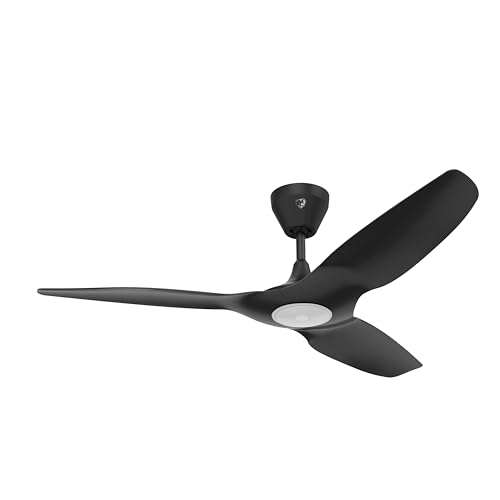
- 52-inch, ultra-quiet DC motor
- 7 speeds + Whoosh breeze mode
- Alexa, Google — HomeKit via Matter on newer units
- Dimmable integrated LED, 16 levels
Is a Haiku overkill for a garage? For most garages, yes. But if your garage is a gym or a converted hangout space, this is the fan that makes it feel like a real room, and it’s the quietest fan on this page by a wide margin.
You get seven speeds, a Whoosh mode that mimics a natural breeze, a wall-mountable remote, and voice control through Alexa and Google — newer units also join Apple Home via Matter. The integrated LED has 16 brightness levels, which covers everything from deadlift lighting to beer-fridge ambiance.
Pros
- Dead silent, even on high
- Seven speeds plus breeze simulation
- Smart control from your phone or voice
- Excellent adjustable lighting for dark garages
Cons
- Costs more than some people’s garage doors
- Molded plastic blades feel less premium than the price tag
Minka-Aire Xtreme H2O 65” — Best for Damp & Unfinished Garages
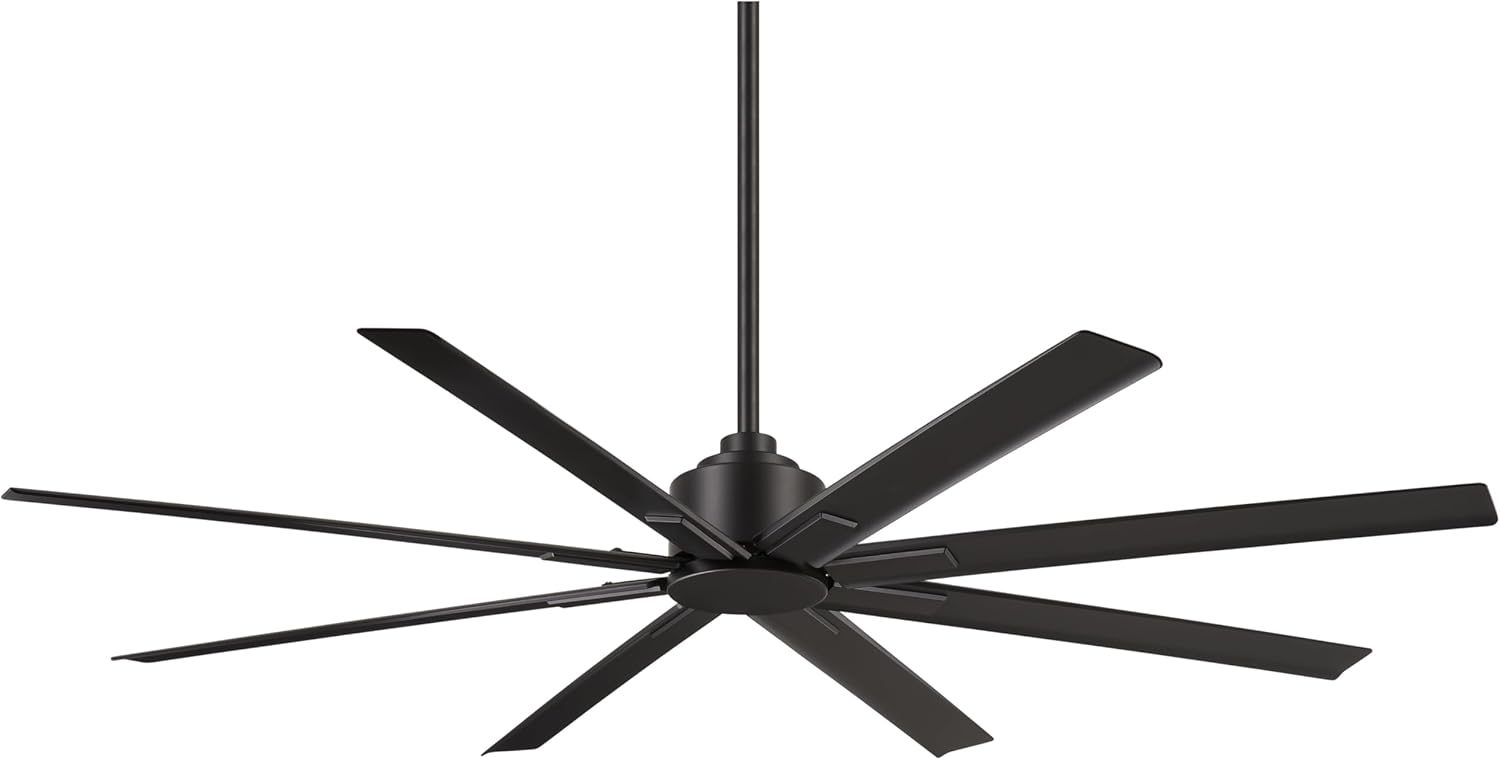
- 65-inch span — big and oversized garages
- Wet-rated: handles humidity & condensation
- Energy-efficient DC motor
- Full-function remote included
Last summer I got called back to a garage where a nice indoor fan had rusted out in 18 months — unheated garage, coastal humidity, condensation dripping off the beams every spring. That’s exactly the situation the Xtreme H2O is built for. It’s wet-rated, so an unfinished or damp garage can’t hurt it.
The 65-inch span is the biggest here and will actually turn over the air in an oversized or high-ceiling garage. The DC motor sips power for its size, and everything runs from the included remote: speed, reverse, off and on. Multiple downrod lengths are available to get the height right.
Pros
- Wet rating means zero worries in unfinished garages
- Huge 65-inch span for big spaces
- Efficient DC motor
- Fully remote controlled
Cons
- Flat-ceiling mounting only — no angled mounts
- No built-in light (add-on kit sold separately)
Heavy-Duty & Workshop Options
A garage that doubles as a workshop asks more of a fan than one that just shelters the car. Sawdust, fumes, and heat coming off power tools call for something built more like a machine. For whole-shop circulation in a damp space, the Xtreme H2O above is the pick; for air aimed right at where you’re working, this is the one I trust.
Air King 9718 18” Industrial — Workshop Spot-Cooler
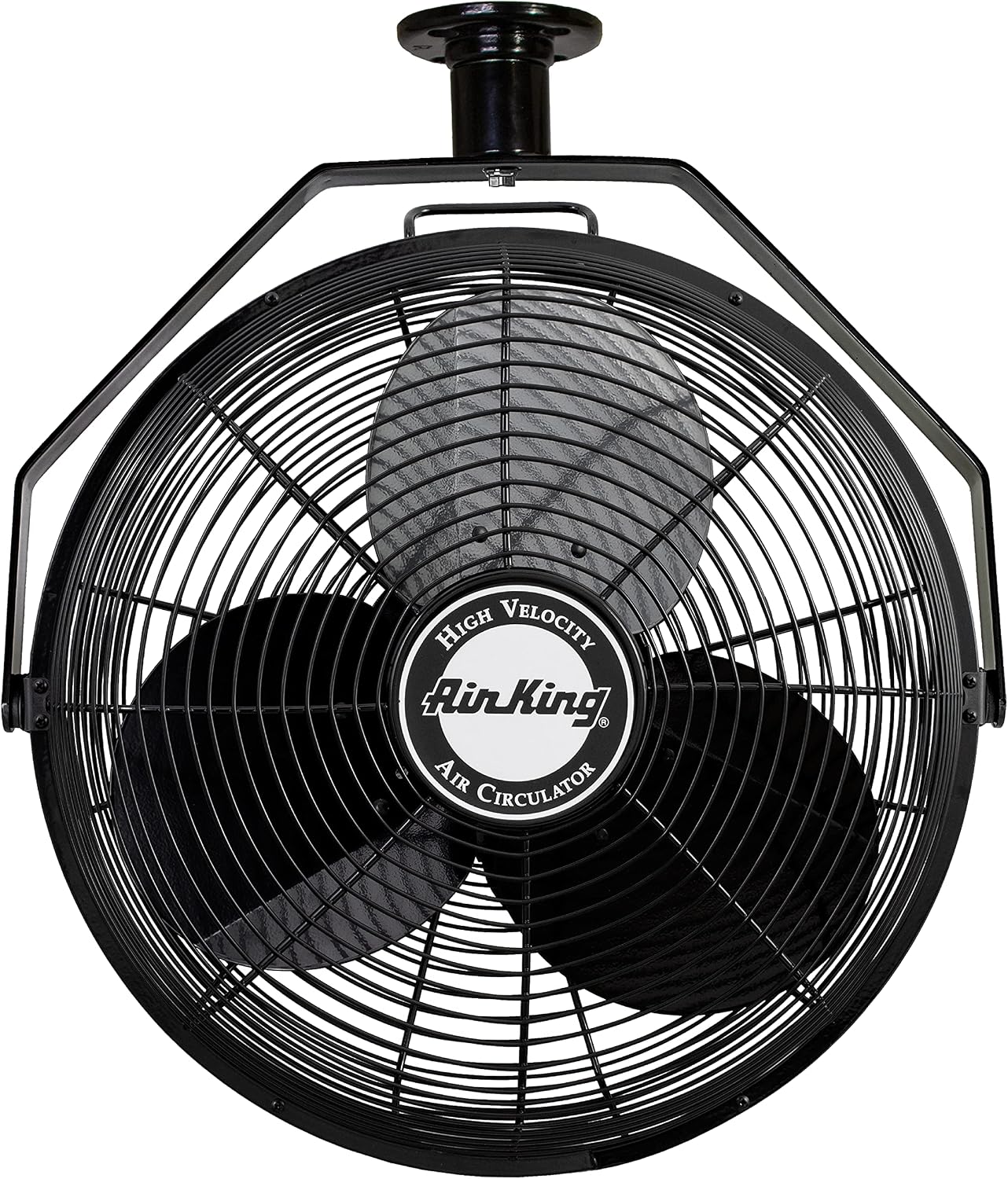
- Up to 7,400 CFM aimed where you work
- Pivoting head — point it at the bench
- 1/6-HP motor, built for continuous running
- Ceiling mount, pull-cord control
Different tool for a different job. A big ceiling fan circulates the whole room; this compact ceiling-mount unit pumps up to 7,400 CFM in one direction, and the pivoting head lets you aim it straight at the workbench or the car bay. When you’re sweating over an engine in July, air on you beats air moving around you.
The 1/6-HP motor is permanently lubricated and rated for continuous duty, and the pull-cord is right where you can reach it. It won’t cool the whole garage — that’s not its job. Pair it with the Phelix and you’ve got the whole shop covered.
Pros
- Serious directed airflow for the money
- Pivots to aim exactly where you’re working
- Built for all-day running
Cons
- Spot cooling only — won’t circulate a whole room
- Industrial looks (which you may consider a pro)
Buyer’s Guide
Buying a ceiling fan might seem like a fairly straightforward task, especially if you have purchased ceiling fans for your home before.
However, purchasing a ceiling fan for a garage can be a slightly different experience. We have put together this handy buyer’s guide to help you make the perfect choice for your space.
Fan Blade Span
One of the most important things to consider when looking for a ceiling fan for your garage, or any room, is the span of the blades.
If your garage gets particularly hot, it can be tempting to opt for the biggest blade span that you can find. However, this isn’t a great strategy.
You should make sure that you purchase a fan that has a blade span that is proportionate to the size of the garage. The majority of standard garages will require a large ceiling fan with a blade span of 50” to 60”. For a larger garage, you will need to go above 62”.
Speed Settings
A lot of ceiling fans feature standard three-speed settings that range from slow to fast.
However, it is possible to purchase ceiling fans that have a wider range of speeds that allow you to create a more specific adjustment to the temperature in the room.
This can be a great option if you are using your garage for activities that require incremental changes in temperature throughout, such as crafting or working out.
Mounting Options
Another hugely important factor to consider when looking to purchase a ceiling fan for your garage is the type of ceiling you have and the mounting options of the ceiling fan.
If you have a flat ceiling in your garage, the majority of all ceiling fans are capable of being mounted to the flat ceiling and you shouldn’t have any issues.
However, if you have a vaulted ceiling in your garage, you will have to look a little more closely at the mounting options of potential ceiling fans.
For a vaulted ceiling, it is important to purchase a fan that has the ability to be mounted at an angle. There are many fans on the market that have this capability, but not all of them, therefore it is important to double-check.
Controls
The controls of the fan are more of a personal preference that should be considered before making a purchase. Some ceiling fans are solely controlled via a chain pull mechanism that is physically located on the fan housing.
This can be preferential over a remote control that can be lost. However, if your ceiling is particularly high, a chain pull might be inconvenient.
In such cases, a remote-controlled fan or even a fan that has the ability to be controlled via smart devices in your home could be a better choice.
Lighting
If you have a garage that is particularly dark during the day or that doesn’t already have some ceiling lighting installed, purchasing a ceiling fan that features integrated lighting can be a great way to get two jobs done simultaneously.
There are various different types of integrated lighting that can be featured on the fan. It is also possible to have integrations that can be dimmed and altered to create different ambient lighting in your garage.
Aesthetics
One of the aspects of a ceiling fan that is less important but still should be considered is the aesthetics of the fan.
If you have a more industrial-style garage area that you use as a workshop, you are less likely to want a fan that features hand-made balsa wood blades.
Alternatively, if you have converted your garage into a place to spend time with friends and family, a more stylish ceiling fan would be appropriate.
As an Amazon Associate, TheFansPro earns from qualifying purchases.
Frequently Asked Questions
Is a low profile ceiling fan suitable for a garage?
If your ceiling is 9 feet or under, it’s not just suitable — it’s the only safe choice. Code and common sense both want blades at least 7 feet off the floor, and in a garage you’re also swinging lumber and ladders around. Higher ceiling? Use a downrod instead; a flush-mount fan up at 11 feet leaves the breeze too far away to feel.
What size ceiling fan do I need for a two-car garage?
Go 56 inches or bigger. A typical two-car garage runs 400–500 square feet, and the 42- and 44-inch fans people usually grab are sized for bedrooms half that size. That’s the single most common mistake I fix — I’ve swapped out three undersized garage fans this year alone.
Can I use a regular indoor fan in an unfinished garage?
Only if the space stays genuinely dry year-round. An unheated garage swings through condensation cycles every spring and fall, and that moisture rusts motors and warps blades on indoor-rated fans. If your garage is unfinished, uninsulated, or anywhere humid, spend up for a damp- or wet-rated fan like the Xtreme H2O.
Do I need a special fan if I do woodworking in my garage?
Sawdust is the enemy of open motor housings. For a working shop, look for sealed or industrial-grade motors — that’s why the Air King is on this list — and clean the blades regularly, because dust loads unbalance them and the wobble kills bearings over time. A fan is also not a substitute for dust collection; it moves fine dust around, it doesn’t remove it.
Will a garage ceiling fan help in winter?
Yes, more than most people expect. Run the fan in reverse (clockwise) on low and it pushes the warm air pooled at the ceiling back down to floor level. In a heated or insulated garage this alone can make the space feel several degrees warmer without touching the thermostat.
Related guides
Kitting out the rest of the house too? See our best smart ceiling fans, the fans that work with Apple HomeKit, our enclosed ceiling fans guide (a smart pick where headroom is tight), and ceiling fan alternatives for low ceilings.
Final Thoughts
Match the fan to the job and you can’t really go wrong: Phelix for the typical two-car garage, Reston if you’re watching the budget, Dempsey under a low ceiling, Xtreme H2O if the space gets damp, and the Air King pointed at wherever you actually stand and sweat. Your garage is the hottest room you own — it deserves better than a dusty box fan on a shelf.
Shopping for a different room? Start at our ceiling fans by room hub.
