
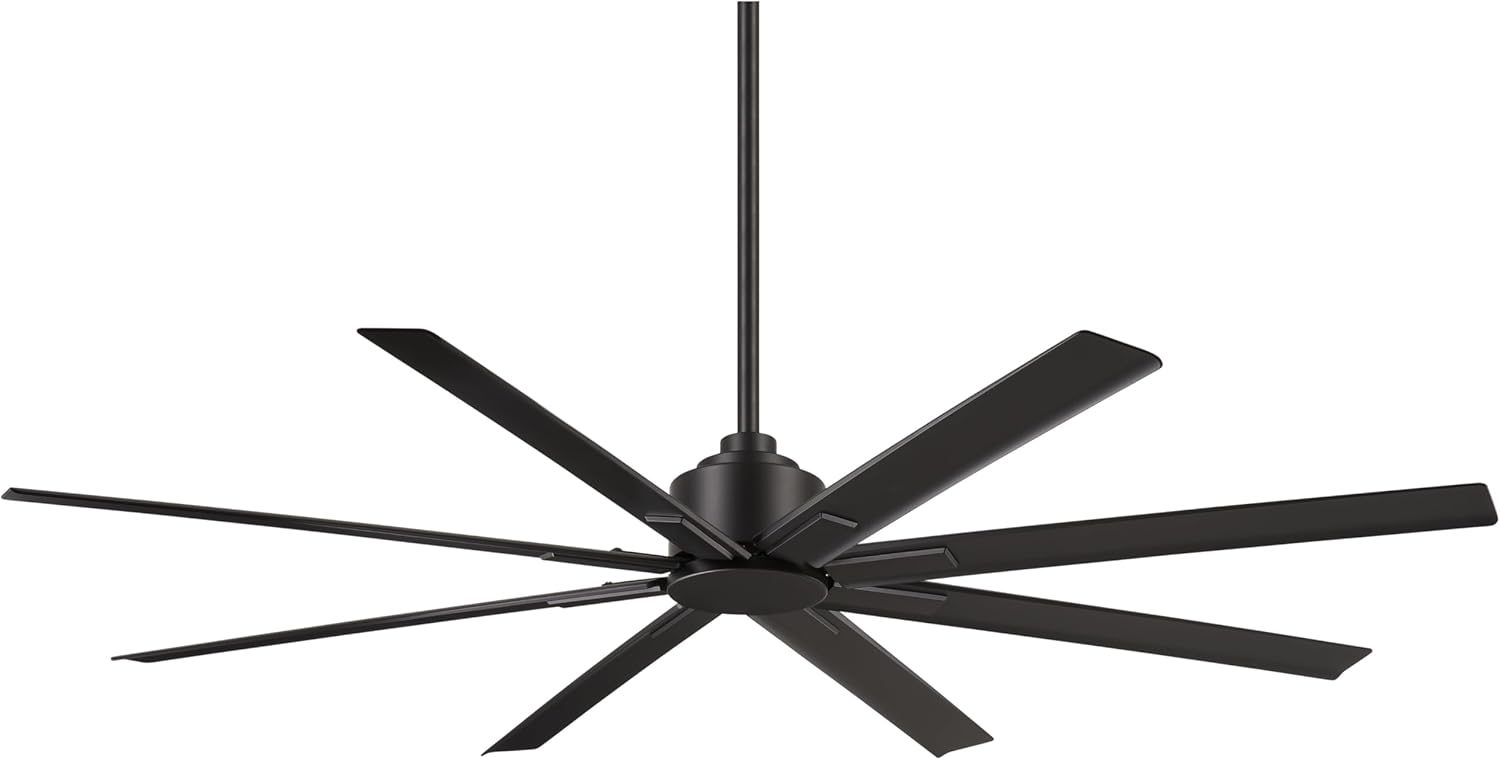
Get the downrod wrong and one of two things happens: the fan hugs the ceiling and barely moves air, or it hangs so low that someone tall clips it. Here’s the quick rule, then a chart you can match straight to your ceiling.
The goal: the blades should end up about 8 to 9 feet off the floor. That’s where a ceiling fan actually pushes air onto you, and it keeps the blades safely above head height (code wants them at least 7 feet up). On a standard 8-foot ceiling you don’t need a downrod at all. For every foot of ceiling above that, add roughly 6 inches of rod.
Ceiling Fan Downrod Length Chart
This assumes a typical fan with about a 12-inch body. Find your ceiling height and read across:
| Ceiling height | Downrod length |
|---|---|
| 8 ft | Flush mount (or 3–4″) |
| 9 ft | 6″ |
| 10 ft | 12″ |
| 11 ft | 18″ |
| 12 ft | 24″ |
| 13 ft | 36″ |
| 14 ft | 36–48″ |
| 16 ft | 60″ |
| 18 ft | 72″ |
| 20 ft | 84–96″ |
Most fans ship with a short 3- to 6-inch downrod, which covers 8- and 9-foot ceilings. Above that you usually buy a longer rod separately — get one from the same brand as the fan so the finish and the wiring sleeve match.
Why the length actually matters
A fan mounted too close to the ceiling can’t pull air from above the blades, so it moves far less air. Stand under one and you’ll feel almost nothing. Drop that same fan to the 8-to-9-foot sweet spot and it suddenly feels twice as strong. The rod isn’t just about looks — it’s the difference between a fan that works and one that spins for decoration.
8-foot ceilings: skip the downrod
If your ceiling is the standard 8 feet, a long rod puts the blades at forehead height. Use a flush-mount (hugger) or an enclosed low-profile fan instead. I go through the best of those in our best enclosed ceiling fans guide — the caged designs are also safer over a top bunk or in a kid’s room.
Sloped or vaulted ceilings
Angled ceiling? You need a longer downrod plus a sloped-ceiling mount (an angle-compatible canopy). Measure to where the fan will actually hang, not to the peak. Anything past about a 30-degree slope needs a special mount, and most fans list the maximum angle their canopy handles. For tall vaulted rooms and shops, the same rules drive the picks in our best garage and workshop fans guide.
Downrods Are Not Universal (Read Before Buying)
The mistake that generates the most return trips to the hardware store: downrods are brand-specific more often than not. Diameters vary (three-quarter inch is common, but half-inch and one-inch exist), and the threading and cross-pin sizes differ between Hunter, Harbor Breeze, Minka and the rest. Buy the same brand as your fan, or a rod explicitly listed as compatible with it.
Finish matters less than fit, but if you can’t match the finish exactly, go darker; a too-light rod stands out more against most ceilings than a too-dark one.
Wobble After Installing a Longer Rod?
A longer rod amplifies any imbalance that a hugger mount used to hide. If the fan wobbles after the swap: tighten every blade screw, check the rod’s set screw and cross-pin, then balance the blades with a $5 clip kit. Nine wobbles out of ten are blades, not the rod.
FAQ
Can a ceiling fan downrod be too long?
Yes. If the blades drop below about 7 feet you run into head-clearance and code problems, and in a big open room an overly long rod lets the fan wobble. Match the chart rather than overshooting.
Do I need a downrod on an 8-foot ceiling?
No. On a standard 8-foot ceiling a downrod would hang the blades near head height. Use a flush-mount or low-profile fan instead.
What if my fan didn’t come with the right downrod?
Buy a longer one in the same brand and finish. Downrods are inexpensive and swap out in a few minutes with the fan powered off at the breaker.
